* about fit * | Custom Dress Form Tutorial
Fast Fashion Sizing Mechanics and Precision Fit Acquisition Strategies
You're standing in the middle of a brightly lit dressing room, struggling to pull a pair of “Large” trousers over your knees, despite the fact that you're wearing a “Medium” from the exact same brand. It's maddening. Honestly, it's enough to make anyone want to swear off shopping forever. We've all been there, questioning our own bodies when the reality is that the industry is just playing a very confusing game of numbers.
Understanding How Fast Fashion Sizing Works and How to Avoid Buying the Wrong Fit requires a bit of a peek behind the curtain of global manufacturing. Look—the truth is that these brands aren't designing clothes for your specific body; they're designing for a “fit model” who represents a mathematical average that might not even exist in nature. When production is scaled to millions of units, precision is often the first thing to go out the window.
It's a volume game. In the world of high-speed retail, speed to market beats accuracy every single time. If a factory needs to churn out ten thousand units of a trendy slip dress in seventy-two hours, the “tolerance” for error increases significantly. This is why you can grab two identical shirts from the same rack and find they fit completely differently.
Seriously, the inconsistency is a feature, not a bug, of the low-cost manufacturing model. But you don't have to be a victim of the “size tag lottery.” By learning a few insider tricks and understanding the mechanics of garment construction, you can master How Fast Fashion Sizing Works and How to Avoid Buying the Wrong Fit without losing your mind in a fluorescent-lit cubicle.
The Industrial Engineering of Inconsistent Sizing
The primary reason behind the chaos of How Fast Fashion Sizing Works lies in the concept of “manufacturing tolerance.” In high-end tailoring, a variance of an eighth of an inch might result in a rejected garment. In the world of fast fashion, that tolerance can balloon to an inch or more. When fabric is cut in massive stacks, the layers at the bottom often shift, leading to pieces that are technically the same size but physically different in dimensions.
Then there's the issue of the “fit model.” Brands usually base their entire size run on one person, often a size 4 or 6. They then use a mathematical algorithm called “grading” to scale that pattern up or down. The problem? Human bodies don't grow linearly. A size 14 isn't just a “blown up” version of a size 4; the proportions change, yet many budget brands don't account for these ergonomic shifts.
Vanity sizing adds another layer of complexity to the mix. It's a psychological tactic where brands label clothes with smaller numbers to make customers feel better about themselves. A “Size 6” at a trendy teenager-focused retailer might actually be a “Size 2” at a luxury house. This lack of standardization makes it nearly impossible to rely on the number on the tag alone.
Look—the source of the garment matters just as much as the brand. Most fast fashion giants source from hundreds of different factories across various countries. A sweater made in Vietnam may use a completely different block pattern than a sweater made in Turkey, even if they both have the same logo on the neck. This decentralization is why your “usual size” feels like a coin toss every time you hit the checkout button.
The Role of Fabric Stability and Cutting Accuracy
Fabric behavior is a massive variable that most shoppers completely overlook. Cheap synthetic blends, common in fast fashion, are notoriously difficult to keep stable during the cutting process. If the fabric stretches while it's being sliced by the industrial blade, the resulting garment will be smaller than intended once the tension is released. It's a technical nightmare that translates to you not being able to zip up your skirt.
Our guide on Formidable Info About Are Oversized Blazers Still In Fashion covers the topic in more depth.
10 Sneaky Ways to Transform Online Shopping from Frustration to Fashion …
Furthermore, the “grain line” of the fabric is often ignored to save money. By tilting the pattern pieces slightly to fit more of them onto a single bolt of fabric, manufacturers save pennies but sacrifice the way the garment hangs. If you've ever had a pant leg that seems to twist around your calf, that's a grain line error. It also affects the fit because the fabric won't stretch in the direction it was designed to.
Quality control is expensive, and in the race to the bottom of the pricing ladder, it's the first thing to be cut. In a luxury setting, every garment is checked against a spec sheet. In fast fashion, they might only check one out of every hundred pieces. If you happen to buy one of the ninety-nine unchecked items, you're essentially gambling on the factory worker's precision that day.
Honestly? It's a miracle any of it fits at all. When you combine rushed labor, shifting fabrics, and aggressive grading, the size tag becomes more of a suggestion than a rule. This is the fundamental reality of How Fast Fashion Sizing Works and How to Avoid Buying the Wrong Fit in the modern era.
Vanity Sizing and the Psychology of the Label
We need to talk about the ego. Brands know that if you fit into a smaller size at their store, you're more likely to feel a “hit” of dopamine and complete the purchase. This has led to a slow “size inflation” over the last thirty years. What was a size 12 in the 1970s is roughly equivalent to a size 6 today. It's a shell game designed to keep you spending.
The problem is that every brand inflates their sizes at different rates. One store might target a “mature” fit with generous proportions, while another targets a “junior” fit that is significantly narrower. If you don't know which demographic a brand is catering to, you're going to struggle. This is why How Fast Fashion Sizing Works and How to Avoid Buying the Wrong Fit requires knowing the brand's “target soulmate.”
Don't let the number define your worth. Seriously. I've seen people have actual breakdowns in fitting rooms because they had to size up. The number is a lie told by a marketing department, not a reflection of your health or beauty. Once you detach your emotions from the tag, shopping becomes a lot more tactical and a lot less stressful.
Always remember that the goal of the brand is to sell clothes, not to provide an accurate measurement of your body. If they think calling a 34-inch waist a “Size 30” will sell more jeans, they'll do it in a heartbeat. Accuracy is secondary to the bottom line.
Tactical Approaches to Ensuring a Perfect Fit
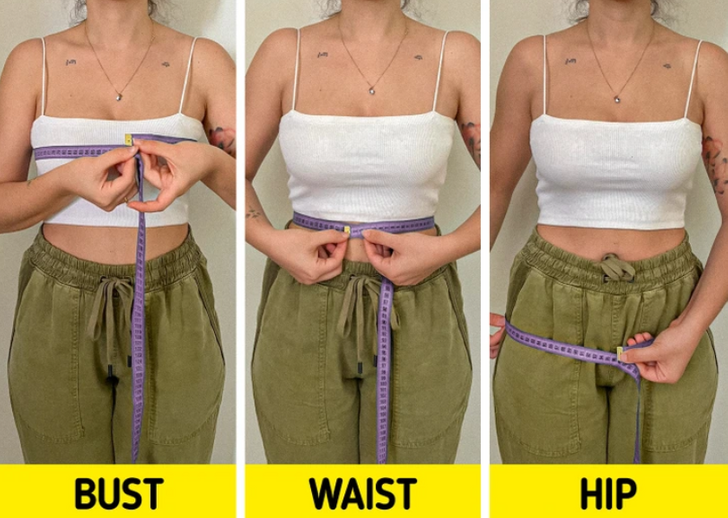
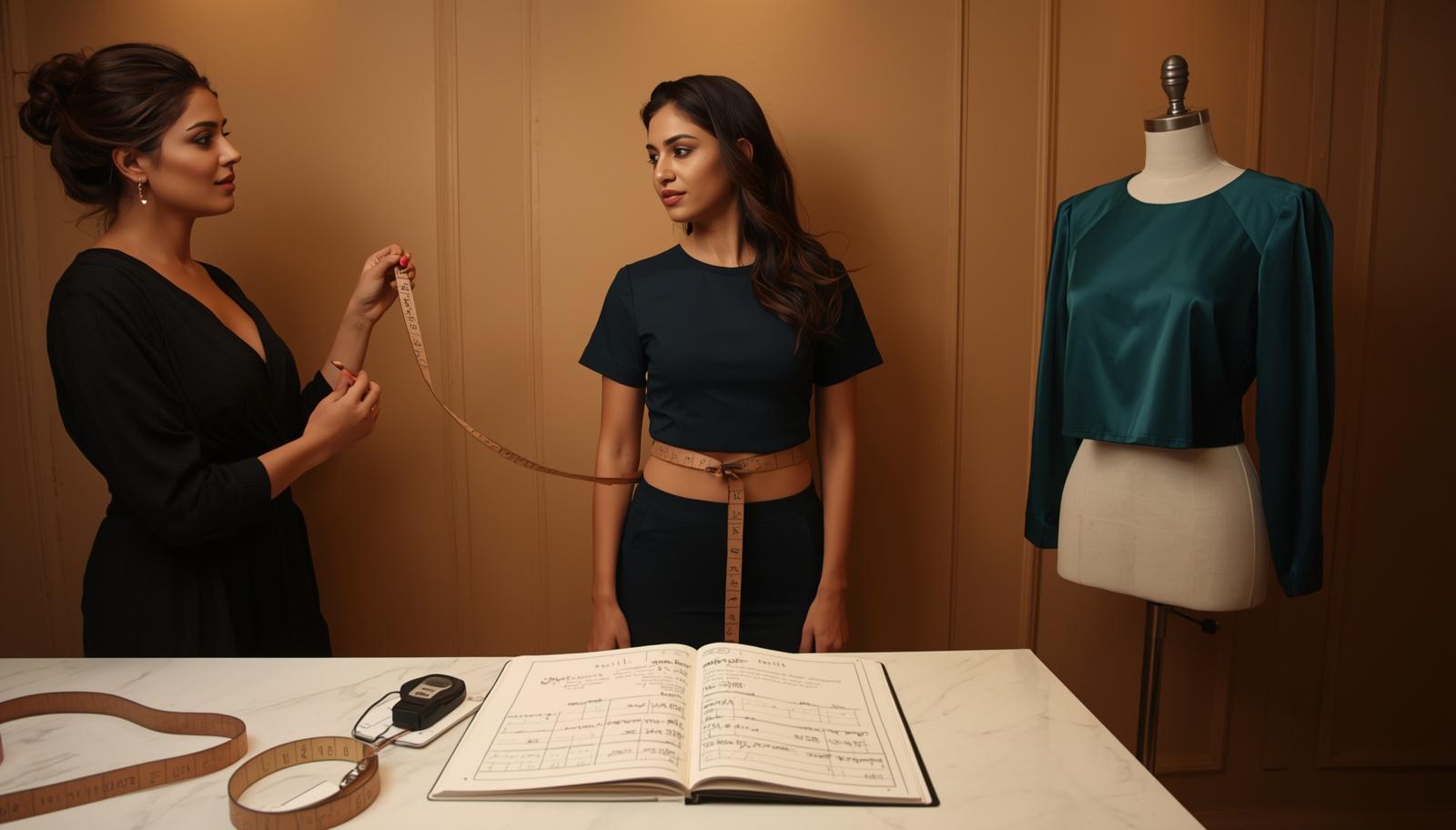
Now that we know why the system is broken, let's talk about How to Avoid Buying the Wrong Fit. The first step is to stop shopping with your eyes and start shopping with a tape measure. You need to know your actual measurements—bust, waist, and hips—in both inches and centimeters. Keep these numbers in a note on your phone. When shopping online, ignore the “S/M/L” labels and go straight to the “Size Chart” or “Garment Measurements” link.
If a website provides “Garment Measurements” (the actual dimensions of the cloth) rather than “Body Measurements,” you've hit the jackpot. Compare those numbers to a piece of clothing you already own that fits perfectly. Lay your favorite shirt flat, measure it from armpit to armpit, and compare that to the chart. This is the single most effective way to bypass the nonsense of fast fashion labeling.
You can find the full details in our article on Fashion Nova Sweaters Are Redefining Affordable Winter Style.
Another pro tip is to pay close attention to the fabric composition. This is a huge deal. If a garment is 100% cotton with no elastane or spandex, it has zero “give.” You generally need to size up in these “rigid” fabrics to allow for movement. Conversely, if a garment has 5% or more spandex, you might be able to size down for a more snatched look.

How to reduce fashion and apparel returns
- Measure your body once a month to account for natural fluctuations.
- Read the fiber content before looking at the size; it dictates the drape.
- Always check the model's height and the size they are wearing to gauge scale.
- Identify the brand's “fit origin” (e.g., European brands tend to be narrower).
- Look for “reviews with photos” to see how the item performs on non-models.
The Science of Fiber and Stretch
Fiber content is the secret language of fit. A polyester-blend knit is going to be far more forgiving than a structured linen weave. When you're browsing, look for keywords like “stretch,” “oversized,” or “bodycon.” These terms often tell you more about how the item will fit than the size tag itself. For example, an “oversized” Small might actually measure larger than a “slim fit” Large.
Don't forget about shrinkage. Fast fashion items are rarely pre-shrunk. If you buy a 100% viscose or cheap cotton item that fits “just right” in the store, it's going to be too small after one trip through the laundry. I always recommend sizing up if the fabric is prone to shrinking. It's better to have a slightly loose shirt than a crop top you didn't ask for.
Structure also plays a massive role. Items with seams, darts, and waistbands are less flexible than unconstructed pieces. If you have a “curvy” silhouette, look for items with “princess seams” or elasticated back panels. These design elements are engineered to accommodate different body shapes within the same size category, making them a safer bet when shopping online.
Ultimately, understanding the physical properties of the material is your best defense. If you know that 100% rayon is going to shrink and has no stretch, you won't be surprised when the Medium feels like a Small after a wash. Knowledge is power, especially when the retail industry is trying to keep you in the dark.
Blouse Sizing: How To Measure Correctly For A Perfect Fit | Fashion …
Utilizing User Data and Social Proof
The comment section is your best friend. Seriously, don't buy anything without reading the reviews. Most modern fast fashion sites allow users to rate the fit as “small,” “true to size,” or “large.” Look for the consensus. If sixty people say the shoes run small, believe them over the brand's official sizing guide. It's the most honest data you're going to get.
User-uploaded photos are even better. Models are often “clipped” in the back to make the clothes look more tailored than they actually are. A real person standing in their bedroom provides a much more accurate representation of how the fabric drapes and where the seams hit. Look for someone with a similar body type to yours to get a realistic expectation.
For a bit of background, our explainer on Best of The Best Tips About Gorpcore Fashion 101 How To Style walks through the key points.
If you're between sizes, the “buy two, return one” strategy is a classic for a reason. While it can be a hassle, it's the only way to guarantee a win when dealing with unpredictable manufacturing. Just make sure you check the return policy first, as some fast fashion outlets have moved toward “final sale” models or charging for return shipping.
Lastly, don't ignore the “Weight” or “Height” calculators some sites offer. They use aggregate data from other shoppers to suggest a size. While not 100% accurate, they are usually better than a blind guess. They take the “average” experience of thousands of people and apply it to your specific dimensions, which helps smooth out the manufacturing variances.
Navigating the Online Fitting Room Experience
Shopping online is essentially a data-analysis task. You're trying to solve the puzzle of How Fast Fashion Sizing Works and How to Avoid Buying the Wrong Fit using limited clues. One often overlooked clue is the country of origin for the brand. A brand based in Spain (like Zara) often uses a “continental” fit which is narrower through the hips and shoulders. A US-based mass-market brand (like Old Navy) often uses a “vanity” fit that is much roomier.
Understanding these “brand DNA” traits will save you hours of return-shipping headaches. If you have broad shoulders, you might want to size up in any brand that caters to a “European” silhouette. If you have a petite frame, avoid brands that specialize in “oversized” American aesthetics, as you'll likely be swallowed by the fabric. It's all about matching your architecture to the brand's blueprint.
Another trick is to look at the “Fit Details” section in the product description. Does it say “Model is 5'10 and wearing a Small”? If you're 5'4, that “mini” dress is going to be a “midi” dress on you. Use the model's stats as a literal yardstick. If the dress looks short on someone who is 5'10, and you're average height, it'll probably hit you at a perfectly respectable length.
- Check the “seam-to-seam” measurements in the description if available.
- Research the brand's parent company to see if they share sizing blocks.
- Avoid “Final Sale” items unless you have already owned that exact piece.
- Use a “size-finding” browser extension that compares different brands.
- Take photos of yourself in successful buys and note the brand/size for future reference.

How to Solve Sizing & Fit Issues in Clothing Dropshipping (And Reduce
The Importance of the Shoulder and Rise
If the shoulders of a garment don't fit, the rest of the piece is usually a lost cause. In How Fast Fashion Sizing Works, the shoulder width is one of the most static measurements. It's very difficult (and expensive) to tailor shoulders. If you're buying a blazer or a structured coat, always prioritize the shoulder fit over the waist fit. You can always cinch a waist, but you can't easily move a shoulder seam.
For trousers, the “rise” is the most critical measurement. This is the distance from the crotch to the waistband. Fast fashion “High Rise” can vary by three inches between brands. If the rise is too short for your torso, you're going to deal with the dreaded “camel toe” or constant sliding. Always look for the actual rise measurement in inches if you can find it.
Keep in mind that “cropped” lengths are a taller person's nightmare and a shorter person's blessing. If you find that “regular” pants are always too long, look for “ankle-length” or “cropped” styles in the fast fashion section. They usually end up being full-length on people under 5'4, saving you a trip to the tailor. It's a classic hack for the vertically challenged.
Look—it's about working the system. The system isn't going to change for you, so you have to learn how to manipulate it. By focusing on the “hard” measurements like shoulders and rise, you significantly increase your chances of a successful “blind” buy.
For the bigger picture, there is a fuller breakdown of Awesome Tips About What Is Romantic Fashion Style in our archive.
Mastering the Art of “Shopping Your Closet”
Before you hit “Buy Now,” go to your closet and find your three favorite items. Measure them. Seriously, go get the tape measure right now. Know exactly how many inches your favorite “comfortable” waistband is. When you see a “Size 8” online that says the waist is 28 inches, but your favorite “Size 8” at home is actually 31 inches, you'll know immediately to size up.
This “reference point” strategy is the only way to combat the psychological warfare of vanity sizing. Your closet doesn't lie, even if the brands do. By comparing the “real-world” measurements of your existing wardrobe to the “theoretical” measurements on the screen, you bridge the gap between digital and physical reality.

Sizestyler – Your Fashion Fit – The Diary Of A Jewellery Lover
I also recommend keeping a “blacklist” of brands that never seem to fit right. If a brand uses a “fit model” that is vastly different from your body shape, stop trying to force it. Life is too short to wear clothes that make you feel like you're the problem. Some brands just aren't for you, and that's okay. Focus your energy on the retailers that seem to use a “block” that aligns with your curves or angles.
Honestly? Sizing is a mess, but you don't have to let it stress you out. Treat it like a science project. Gather your data, test your theories, and don't get emotionally attached to the result. When you stop looking at the tag and start looking at the tape, you'll never buy the wrong fit again.
Common Questions About How Fast Fashion Sizing Works and How to Avoid Buying the Wrong Fit
Why does my size vary so much between different fast fashion stores?
This happens because there is no legal or industry-wide standard for what a “Size 10” or “Large” actually is. Each brand develops its own proprietary “fit block” based on its specific target customer. Additionally, because these brands use multiple factories worldwide, the manufacturing tolerances and cutting techniques can vary wildly, leading to significant size discrepancies even within the same brand.
Is it better to size up or down when shopping online?
As a general rule, it is safer to size up. It is significantly easier and cheaper to have a garment “taken in” by a tailor than it is to have it “let out,” as most fast fashion items don't have extra fabric in the seams for alterations. Furthermore, common fast fashion fabrics like cotton and viscose are prone to shrinking in the wash, so a slightly larger fit initially can save the garment in the long run.
How can I tell if a garment will be “true to size” before I buy it?
The best indicator is a combination of the “Garment Measurement” chart and user reviews. Look for reviews from people who have provided their height and weight. If the majority of reviews state that the item “runs small,” you should ignore the size chart and go up one size. Also, check the fabric composition; items with high elastane content are more likely to fit “true to size” because they can stretch to accommodate your shape.
Does the price of a fast fashion item affect its sizing accuracy?
Surprisingly, not always. While slightly more expensive “premium” fast fashion lines may have better quality control, they still often use the same grading algorithms. However, “ultra-fast fashion” items that are exceptionally cheap often have the worst sizing accuracy because they are produced at such high speeds that the cutting and sewing tolerances are very loose. In those cases, you are much more likely to encounter “wonky” sizing.
Should I trust the “AI Size Finders” on most retail websites?
They can be a helpful starting point, but they shouldn't be your only source of truth. These AI tools use statistical averages based on what other people with similar heights and weights have kept versus returned. They don't know your specific body composition (e.g., if you carry weight in your shoulders or your hips). Use them as a suggestion, but always double-check the actual measurement chart if it is available. Knowledge of your own body measurements will always beat an algorithm.